

Election Day Buzz and Beyond

Elections and lawsuits and maps, oh my!

It’s a big time in the world of voting and elections! Tuesday’s election brought near record-breaking voter turnout for an off-year election. The unofficial count shows 3 million out of over 18 million Texas voters turned out to vote in the Constitutional Amendment Election on November 4—approximately 15% voter turnout, beating the previous record set in 2023 of 14.5%. It’s still not what we would wish for civic participation on crucial issues, but we are moving in the right direction.
All 17 constitutional amendments on the ballot passed. It is uncommon for constitutional amendments to fail at the polls. Since 1876, the legislature has proposed 714 constitutional amendments. Of those amendments, 530 have been approved by the electorate.
With the passage of these amendments, Texans will see property taxes reduced for certain taxpaying populations and new dedicated funds for dementia research, water infrastructure, and workforce education. There were also changes to the state’s judicial oversight process and rules requiring judges to deny bail in certain felony cases.
The amendment most related to elections is the amendment clarifying “that only U.S. citizens may vote—codifying existing state/federal law.” This amendment is part of a larger effort to focus resources on cleaning up voter rolls and ensuring that no noncitizen casts a ballot in Texas or the nation. Recently, the Department of Homeland Security overhauled SAVE, the Systematic Alien Verification for Entitlements database, to make it easier for states to screen for noncitizens on their voter rolls. Out of the more than 18 million voters on the Texas voter list, 2,724 registered voters were flagged as “potential noncitizens.” This is 0.0151% of the registered voters in Texas. The flagging system is not perfect, however. Some county elections officials are checking with some of those flagged from their counties and already 6 voters have confirmed that they were flagged in error and they are indeed U.S. citizens. If you know of anyone affected by the SAVE database voter roll purge, please email us at staff@texasimpact.org.
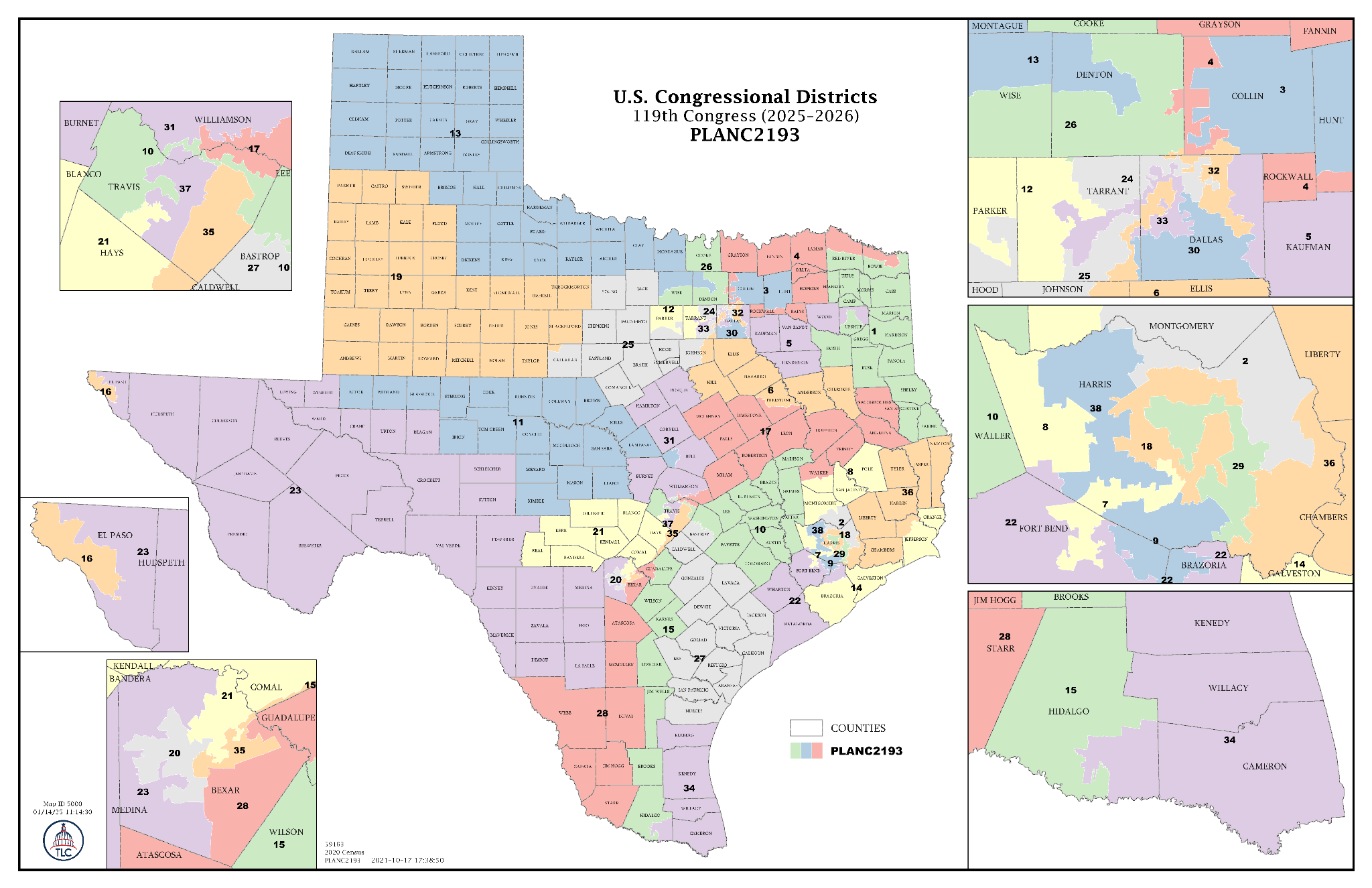
In other election news, after a two-month fight in the legislature, the Texas redistricting plan has had its day in court. The three-judge panel is still deliberating the case after a trial that ended on October 10, 2025. The judges on the panel were Judge Jeff Brown, 5th Circuit Judge Jerry Smith, and Judge David Guaderrama. The lawsuit argues that the new map constitutes illegal racial gerrymandering and dilutes the voting power of Black and Hispanic voters. A ruling is expected soon, as the state needs to proceed with candidate filings for the 2026 primaries which begin Saturday, Nov. 8. Regardless of the ruling, the Supreme Court will likely have the final say, as the losing side is expected to appeal the panel’s decision.
In still other big election news, Texas Secretary of State and top election official Jane Nelson is opposing a GOP lawsuit that seeks to close the state’s primaries. Currently, Texas has an open primary system, meaning that voters do not have to declare any party affiliation and can vote in either the Democrat or Republican primary. If the state moves to closed primaries, that will change. According to Votebeat Texas, the Republican Party of Texas says the state’s open primaries violate their constitutional right to freedom of association, alleging in their legal filings that some Democratic and independent-leaning voters are casting ballots in Republican primaries and boosting more moderate candidates. The Texas Election Reform Coalition (TERC), of which Texas Impact is a member, will be following the issue and informing voters of any developments.
In the meantime, Texas Impact encourages all voters to check their voter registration now in preparation for the primaries on March 3, 2026. And remember: it’s never too early to talk with your faith community about the importance of voting.
Rebecca McIlwain’s piece feels like someone gently walking you through the heartbeat of democracy not with noise or drama, but with care and clarity. She doesn’t just list numbers and amendments; she shows us the people behind them, the quiet effort of millions who still believe their voice matters. There’s something deeply human in her tone hopeful, even when the turnout isn’t perfect. Her attention to the details, like the impact on dementia research or water infrastructure, reminds us that voting isn’t abstract it’s about real lives. And when she speaks of voter roll errors and court cases, it’s not just legal talk it’s about fairness, trust, and belonging. This isn’t just an update it’s a reminder that democracy is a shared story, and we all have a line to write in it.