

Election Updates and Concerns Take Center Stage

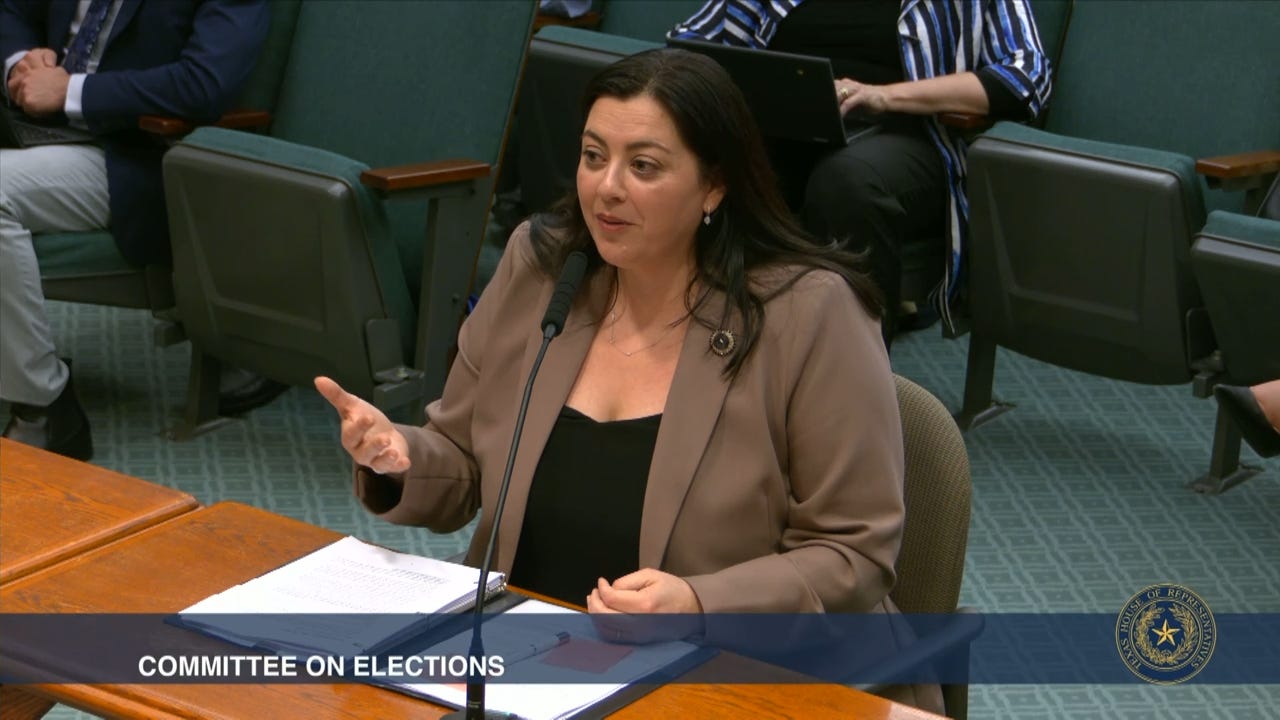
Last week the Texas House Elections Committee held a public hearing to address some of the issues put forth in the Interim Charges by Speaker Burrows.
Monitoring: Monitor the implementation and associated rule making of all legislation passed by the Committee and enacted by the 89th Legislature to ensure that legislative purposes are properly implemented, including the following:
SB 827, relating to the audit of an election using an electronic voting system.
Election Timelines: Examine statutory timelines related to the administration of elections, including key deadlines. Evaluate the need to make adjustments to improve election administration, transparency, and voter access.
Election Transparency and Ballot Privacy: Survey the entities and types of election-related information subject to the Texas Public Information Act. Additionally, review ballot privacy and security requirements. Make recommendations to increase transparency, protect the public’s right to review and inspect election records, and ensure ballot secrecy remains intact.
Citizenship and Voting: Study the integrity of the voting procedures in Texas, including voter registration and voter-roll maintenance, and make recommendations to ensure that only U.S. citizens are able to register and vote in Texas.
Election Administration Staffing Needs: Study the challenges faced by election officials in finding volunteers and staff for early-voting and election days. Identify methods or programs to increase the number of election workers necessary to administer elections.
Many of the issues such as election timelines and the update on audits relate primarily to the administrative mechanics of conducting elections across the state. In a state with counties that vary so widely in size and structure, implementing new election laws creates widespread ripple effects so complicated that county election officials may want to pull their hair out. Testifiers from small and large counties alike spoke to the struggle to meet the increasing regulations for extending early voting, verifying citizenship, and adequately staffing elections—especially given the high stakes and lack of additional state funding for the new mandates.
Much of the testimony and questions from lawmakers centered on the topic of citizenship and voting. Everyone agrees that clean and accurate voter rolls are important to ensure the integrity of elections. The devil, as they say, is in the details. They discussed questions such as how to best collect verifying data from citizens, how to verify the ever-changing status of voters (i.e. those who move, become naturalized citizens, change their name, etc.), and how to safeguard the data.
Local elections offices have been tasked with verifying those registered voters who were flagged as potential noncitizens. If that flag proved to be justified, the voters would be sent a letter, asked to verify their citizenship, and then potentially removed from the voter rolls. Kim Rinn, Tax Assessor-Collector and Elections Administrator of Austin County spoke of not having access to the Department of Public Safety database (considered to be one of the more reliable sources of voter verification data) and leaning on her local sheriff office for assistance in verification. It took her and her staff two full days to verify that only 7 individuals met the requirement to receive the notification letter.
The hearing revealed an on-going tension between efficiently verifying data to ensure only rightful citizens are registering to vote and wrongly flagging eligible voters who are purged from the election rolls. Resource witness, Monica Foster of the Tax Assessor-Collector Association of Texas, followed up with her own concerns about making statewide databases available to county-level personnel for the purposes of verification.
The Elections Committee will continue to discuss how to ensure voter privacy is safeguarded, even as Texas voter records were shared with the federal government and the requirement of proof of citizenship for voter registration is likely to be reintroduced in the next legislative session.
Witnesses also expressed concerns about online disinformation that undermine public confidence in elections despite evidence showing election accessibility and credibility at a very high level. Among those testifying was David Becker with the Center for Election Innovation and Research, who pointed out that Texas elections are operating at the highest standard to date.
The last issue discussed in the day-long hearing was that of election administration staffing needs. It was reported that the average local election worker is 72 years of age and many experienced workers are leaving due to health and other issues. Most polling places require a minimum of three workers per site and county election officials testify that they are having difficulty finding enough staff. Issues such as long hours, low pay, and increasing harassment from the public contribute to the shortage of election workers. The result of a lack of workers may result in fewer polling locations, slower election results, and ultimately, lower voter turnout.

A second Interim hearing of the House Elections Committee is expected to take place in early August. In the meantime, the Texas Senate Committee on State Affairs will meet on Tuesday, June 23 at 9:00 AM; the hearing will be streaming here. On their agenda is maintaining election security and ensuring efficiency in Texas elections. Oral or written public testimony is invited.
I’m trying to get people out into the streets with a specific intent and purpose, to shore up collective power, and cohesion in the lead up to the next election.. vote rehearsals! Fake candidates, real policy positions, mingling and voting right there and then in third spaces. Would you help me do that Rebecca?