

Getting Schooled
House Public Education's First Interim Hearing of 2026


On Monday morning the House Public Education committee met for its first hearing of the 2026 interim. There were two items on the agenda, the first item vaguely titled the “State of Education.” For this first charge, there were seven invited panels of witnesses, totaling to 22 invited witnesses. The invited witnesses ranged from Mike Morath at the Texas Education Agency to demographer from Texas Demographic Center Dr. Helen You.
Running more than nine hours long, the education committee heard from a wide variety of invited and voluntary witnesses who took their time to craft meaningful testimony. Texas Education Freedom Accounts, literacy, and funding continue to be an issue at our Texas public schools. However, there was one solution that was brought up over and over again: We must invest in our teachers.
The first invited witness was Mike Morath from TEA. Morath was able to provide state-wide education statistics to help both the committee and the public understand the current state of Texas education. Morath informed the committee that Texas public schools have about 5.4 million students and around 380,000 teachers. About 60% of Texas public school students are economically disadvantaged, 50% are reading on grade level, and less than 50% are on grade level in math. As the largest educator of rural students in the country, Texas is falling behind in funding and literacy by all measures.
One of the most important parts of quality children’s education is a certified and educated teacher. However, Texas has seen a rise in uncertified teachers, particularly within the younger workforce. As schools become politicized, books get banned, and teachers are afforded no meaningful raises to survive in the cities they live in, fewer college graduates are pursuing a career in education.
During an interaction with Dr. Joe Kucera from the Texas Association of Midsize Schools, Rep. John Bryant presses Kucera to acknowledge why Texas schools are not able to retain certified teachers and why there are fewer teachers getting certified. In the clip below, you can watch Kucera explain the teachers’ heavy workload and the emotional toll it takes to be a good teacher. Rep. Bryant quickly jumps in to say
It is remarkable to me that you guys won’t say anything about financing. I’m not talking about the price of gas, I’m talking about the salary that is paid to our teachers. And if you won’t come before this committee and advocate that they need to be paid more, they are being paid on average $7,000 a year less than the national average. If you guys won’t come in here and say that, who is going to say it?
With state funding stagnant and school districts across the state getting taken over by TEA, there is little incentive for new graduates to become certified teachers. If we want to fix the literacy issues and education gaps among students, we must invest in those who are in the classroom with them every single day.
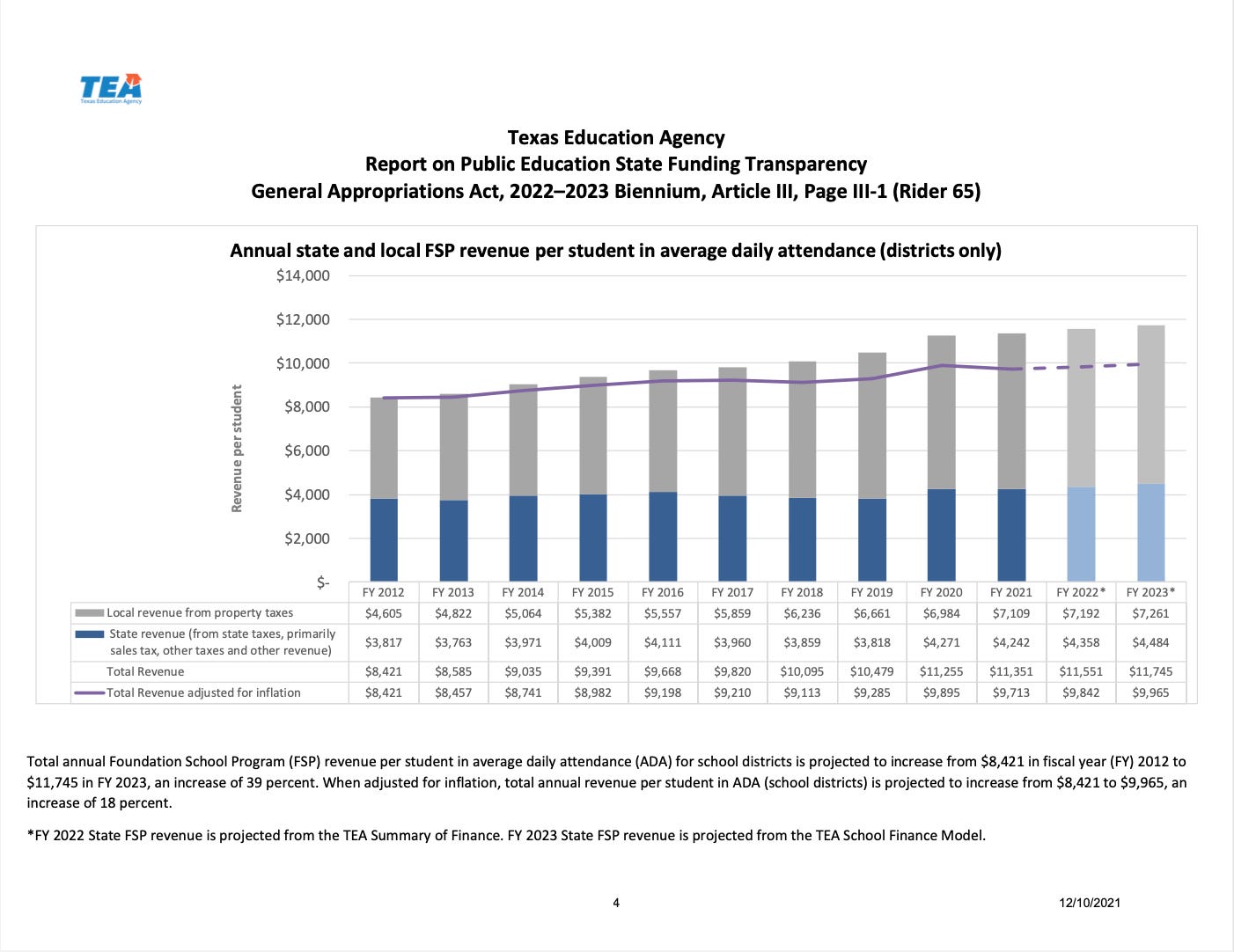
During Morath’s testimony, Rep. Bryant referenced a graph from the TEA website that showed annual state and local Foundation School Program revenue per student in average daily attendance (school districts only), with a line to show the amounts adjusted for inflation. You can see in the graph below that adjusted for inflation: School revenue only increased by $1,544 in nine years. State revenue has increased by even less than $1,000. In the 2019-2020 school year, only 3.8% of teachers were uncertified. In the 2023-2024 school year, 12% of teachers were uncertified, amounting to more than 42,000 uncertified teachers in Texas public schools. With funding barely increasing each year, and more uncertified teachers leading classrooms, public schools are underfunded and under-resourced. Texas must incentivize certified and experienced teachers to work in our public schools.
This is where the frustration comes from. Our schools need help, and our best educators are leaving. Harvard graduate Ale Checka, who testified yesterday (below), has been teaching for eighteen years, and she will leave at the end of this academic year. Checka explains that in Fort Worth ISD, she was forced to abandon a book-centered curriculum to instead teach TEKS from literature excerpts. Checka can no longer teach full novels or books, due to the high amount of testing and the schedule it imposes. As our teachers gain more and more responsibility, and have to jump through more hoops to teach our students, they are not given raises and are kept from doing what they are trained to do.
After watching yesterday’s hearing, it is clear that there are frustrated parents, teachers, administrators, and community members. Raising teacher salaries won’t fix everything, but it addresses something legislators and the TEA seem to have forgotten. Texas’ teachers are the most important part of our student’s education. We must pour the necessary resources and funds into our teachers to ensure that they can prepare our students for the future.