

Public Goods
Committees on Disaster and Flooding interview Texas Water Development Board

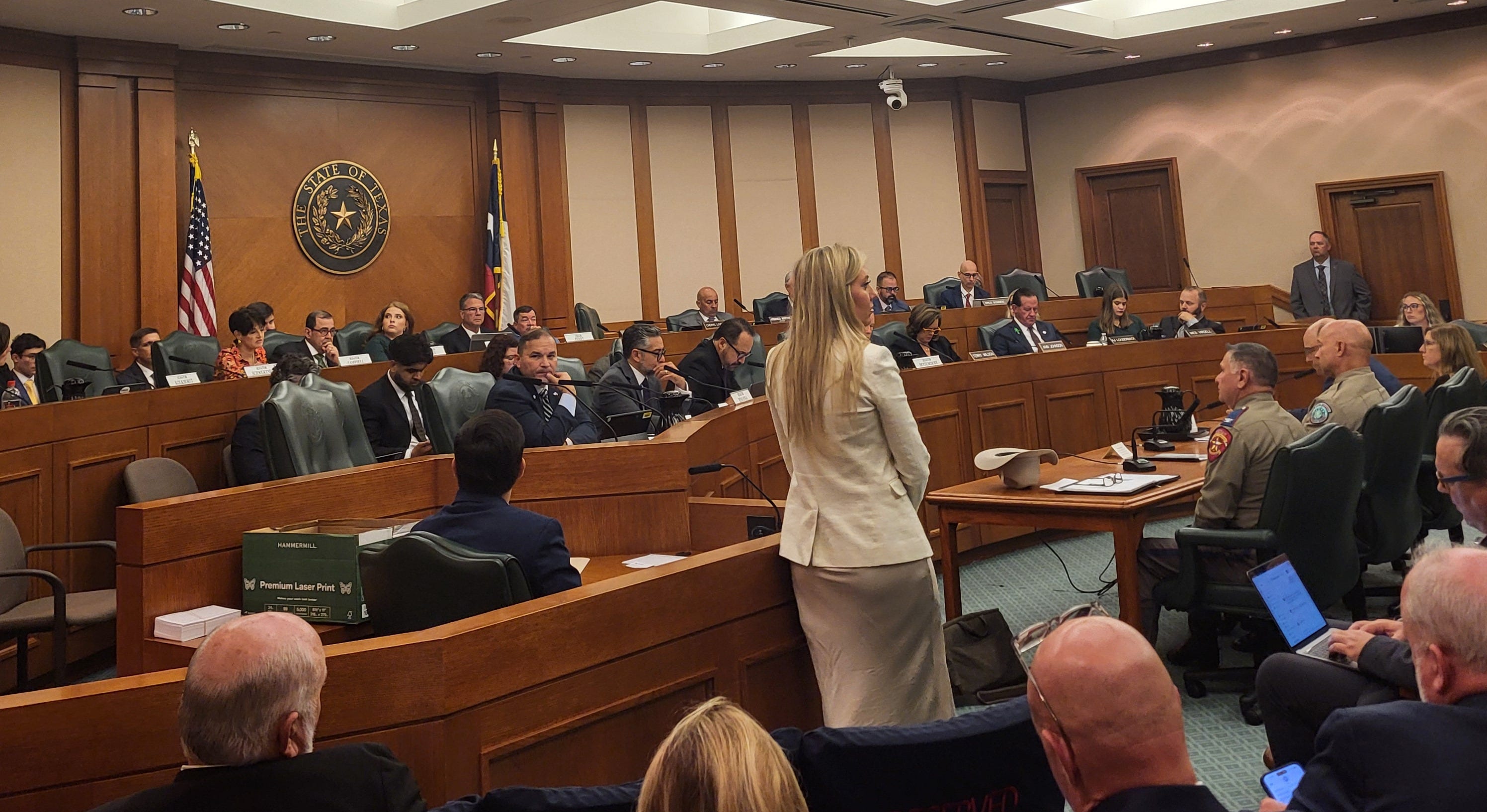
The third panel of witnesses at Wednesday’s Select Committee on Disaster Preparedness and Flooding hearing was made up of staff from the Texas Water Development Board.
TWDB Chairman L’Oreal Stepney began her comments with background on the history of the Texas Flood Plan. It began with with the 86th Texas Legislature, which passed legislation on infrastructure and flood planning. SB 8 from that session directed the Texas Water Development Board to initiate a flood planning process. They also created the Flood Infrastructure Fund (FIF), which would be used to support flood mitigation and infrastructure projects carried out by local and county governments.
Since that time, the TWDB has convened fifteen Regional Planning Groups (RPB), each of which represents a major watershed in Texas. The RPGs are made up of local officials and stakeholders familiar with each region’s flood risk. RPGs work to assess flood risk then develop plans for needed interventions to mitigate flood losses and improve public safety.
There are three-hundred and fifty planning group members, sponsors, and engineering consultants. Collectively they have held five-hundred and fifty public meetings. The results of this work were aggregated into the Texas Flood Plan, which was released in August of 2024.
The Texas Flood Plan quantifies the risk of flooding in Texas: 1.6 million buildings, six thousand hospitals, nearly sixty-four thousand road miles, 1.3 million residential buildings, and 5 million people are at risk of flooding. One in six people in Texas lives or works in known flood hazard areas.
The reason flood planning was carried out by regional groups is because the causes of flooding, and the impacts flooding has, vary so much by region. Coastal flooding due to hurricane storm surge in Rockport is much different than the thunderstorm-driven flash flooding in Kerrville earlier this month. Local officials are most familiar with their areas and what is needed to develop an effective flood plan.
Recommended projects included in the Texas Flood Plan are eligible to receive funding from the Flood Infrastructure Fund (FIF). The FIF offers funding to support flood projects on a competitive basis. Each project is evaluated and funds are offered as either grants or low-interest loans, depending on the mean household income for the community benefitting from the project.
Of the projects outlined in the State Flood Plan, $2.6 billion are flood management evaluations, $49 billion are flood mitigation projects (half of these are one large project to protect the Texas Gulf Coast from flooding called the “coastal spine”), and $2.8 billion are flood management strategies, like warning systems and evacuation planning.
TWDB receives proposals for FIF financing for these projects from RPGs, who prioritize projects based on their region’s greatest needs. TWDB supports communities applying for FIF funding, including a guidebook available to communities that lists the criteria and steps to apply for funding. To date, requests for FIF funds have reached $4.7 billion, reflecting the great need for flood infrastructure in Texas.
To date, TWDB has awarded $670 million for 140 projects. A significant number of these projects have been in Flash Flood Alley and many of them can be considered early warning systems like stream gauges, sirens, and other flash flood safety measures.
TWDB also administers the federal National Flood Insurance Program (NFIP). To be eligible for NFIP, communities have to meet certain flood mitigation criteria. If those criteria are met, homeowners are able to get flood insurance for their property at a reduced cost. TWDB works with communities to ensure they are able to meet the criteria for NFIP. They also help communities align their FIF projects with NFIP requirements to ensure the most efficient use of state and federal funds and to provide the maximum benefit to the community.
Questions from members of the joint committee focused on three areas:
Did the July 4 Kerrville flood align with TWDB’s assessment of flood risk for the area?
Chair Stepney reported that based on their preliminary analysis and data received from Texas Division of Emergency Management (TDEM), the July 4 Kerrville flood is classified as a 500-year flood.
The term “500-year flood” means that based on climatological data (30 years of records), a flood has a one in five-hundred chance of occurring. Because that language is often misunderstood by the public, some now refer to flood risk by the equivalent percentage. A 500-year flood is the same as a flood risk of 0.2%. A 0.2% flood risk means a flood that has a 0.2% chance of happening in any given year.
(A more detailed explanation of flood return intervals is available here)
What is TWDB’s role in preparing for and responding to floods?
After some questions from Senator Bettencourt about whether TWDB’s model performed as expected during the emergency, Chair Charles Perry clarified that as a planning organization TWDB’s role is not to forecast floods or to serve as first responders or emergency management. Their role is to assess flood risk in Texas and support and coordinate efforts to mitigate that risk. They use flood models to help assess flood risk.
Further clarifying the role of modeling studies at TWDB, McMath explained that when they started working on the Texas Flood Plan, there were 36 counties which did not have basic flood hazard data. TWDB prioritized running the model for each of these counties so that every county in Texas has a baseline assessment of flood risk. That baseline assessment informed the recommendations made by the regional planning group. After a significant flood it is possible to use data from the flood to validate and improve the model, which will lead to improved planning in the event of another flood.Can the process of awarding FIF grants and loans for flood mitigation projects be improved?
The Upper Guadalupe River Authority (UGRA) submitted a pre-proposal for a comprehensive river flooding warning system along the Guadalupe River in 2024. TWDB responded that they would award the funds for the project primarily as a zero-interest, thirty-year loan. This decision was based on a formula TWDB uses to evaluate all applications that was designed to encourage as much investment in flood mitigation as possible while maintaining sustainability of the program. UGRA decided not to go through with the project because the public did not support the tax increase necessary to repay the loan.
Rep. Joe Moody asked TWDB what the legislature could do to help TWDB fund more of these necessary infrastructure projects, saying that all of these projects are worthwhile and important. He noted the benefits members of his district received from FIF funding
TWDB’s Bryan McMath answered Moody “not only can we do better, we will do better. Unfortunately we have a limited amount of capital, so we work hard to incentivize the realization of projects, so we have to find the right funding level to incentivize as many projects as possible without running out of money.”
Chair Perry concluded the discussion about infrastructure investments by saying “I wish the public demanded that we spend money on these things, but what we have is the public clamoring for other things.” He went on to lament the lack of public support for necessary infrastructure investments, calling us a “Walmart generation” that wants to spend as little as possible and is not concerned about quality or sustainability.
In the words of Rep. Moody, “This is an opportunity for us to rethink how we deploy these resources and I think we have an opportunity to get [TWDB] to do more [investment in flood safety].”